
Notes #1
Have at it.

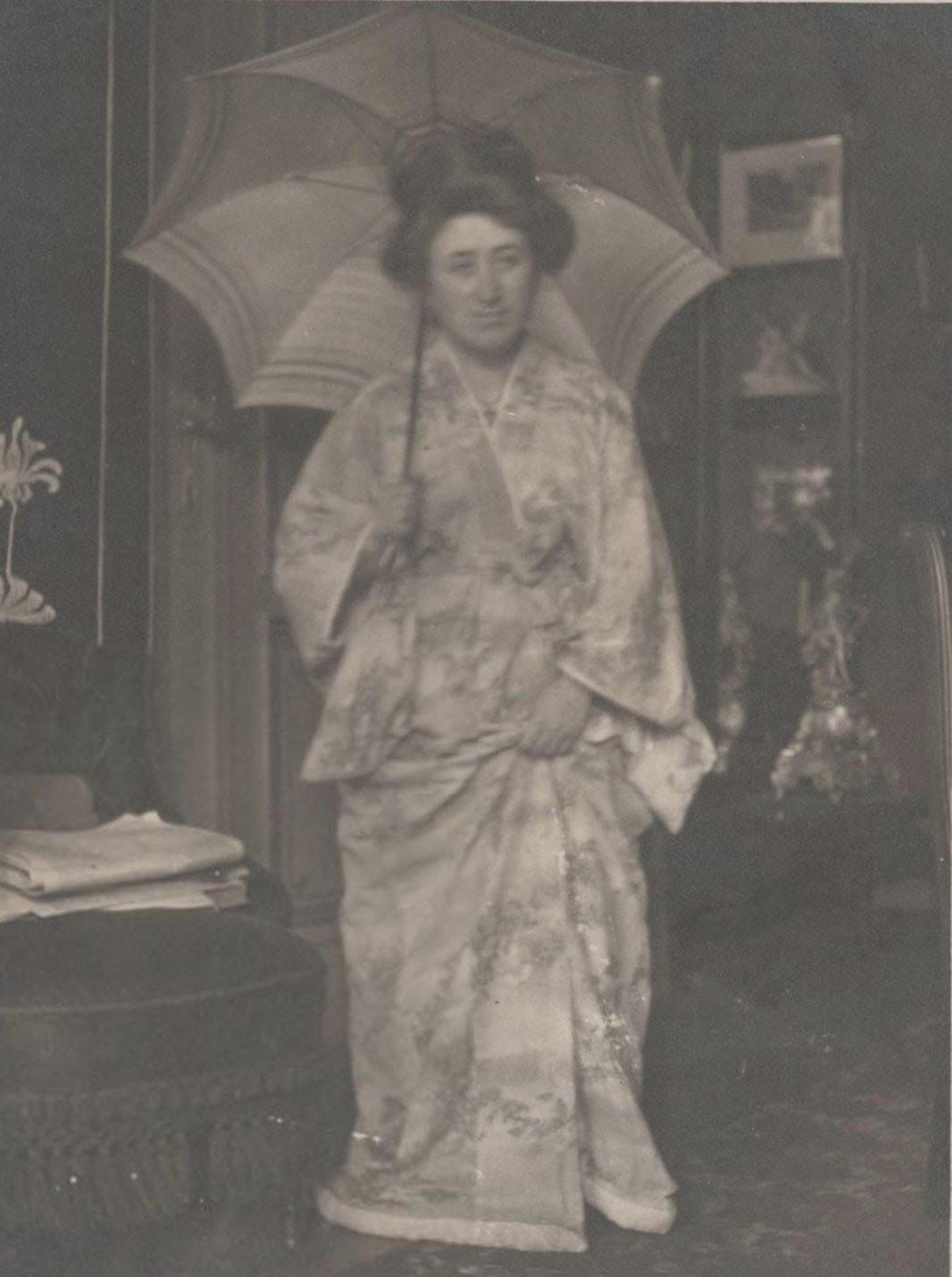
I own very little; a lot has been lost or forgotten. But this is no sacrifice: only truly splendid buildings or objects are worth looking at, and it goes without saying that these don’t belong to me.
We were convinced we were fighting so that everyone could have what only a few possessed: Mario Melloni, who wrote a column for L’Unità under the pseudonym Fortebraccio, once wittily objected, ‘You are working for the well-being of the proletariat; for me the ill-being of the bosses is enough.’
Rossana Rossanda, The Comrade from Milan (2005)
It’s better to eat porridge together than pork cutlet alone.
Together (dir. Lukas Moodysson, 2000).
The worse, the better.
Motto of Narodnaya Volya (People’s Will), late nineteenth-century Russian terrorists.
Anyway I couldn't have made the sentimental assumption that Pyle made. I know myself, and I know the depth of my selfishness. I cannot be at ease (and to be at ease is my chief wish) if someone else is in pain, visibly or audibly or tactually. Sometimes this is mistaken by the innocent for unselfishness — when all I am doing is sacrificing a small good — in this case postponement in attending to my hurt — for the sake of a far greater good — a peace of mind when I need think only of myself.
Graham Greene, The Quiet American (1955)
When the ancient slave, crucified by his master, writhed in ineffable agony, when the serf collapsed under the rod of the corvée overseer or under the burden of labor and misery, at least the crime of man against man, of society against the individual, lay open, exposed, atrocious in its nakedness, blatant in its brutality. The crucified slave, the martyred serf, died with a curse on the lips, and his dying gaze met his tormentors with hatred and a promise of revenge. Only bourgeois society draws a veil of invisibility over its crimes.
Rosa Luxemburg, Nur ein Menschenleben
“The intellectual history of the decades after 1875 is full of the sense of expectations not only disappointed — ‘how beautiful the Republic was when we still had the Emperor,’ as a disenchanted Frenchman joked — but somehow turning into their opposite.”
Eric Hobsbawm, The Age of Empire: 1875–1914 (1987)
Whatever happens, we have got
The Maxim gun, and they have not.
Hilaire Belloc, The Modern Traveller (1898)
We did our best to conjure up the culinary staples of our culture, but since we were dependent on Chinese markets our food had an unacceptably Chinese tinge, another blow in the gauntlet of our humiliation that left us with the sweet-and-sour taste of unreliable memories, just correct enough to evoke the past, just wrong enough to remind us that the past was forever gone, missing along with the proper variety, subtlety, and complexity of our universal solvent, fish sauce.
Viet Thanh Nguyen, The Sympathizer (2013)
Even in Schiller Park the leaves drop from the trees in a timely fashion, in the autumn, but they are not left to lie. In the Tiergarten, for instance, a melancholy walker can positively wade through foliage. This sets up a highly poetic rustling and fills the spirit with mournfulness and a sense of transience. But in Schiller Park, the locals from the working-class district of Wedding gather up the leaves every evening, and dry them, and use them for winter fuel.
Rustling is strictly a luxury, as if poetry without central heating were unnatural.
Joseph Roth (1923)